

How Amber Electric heard from 100 battery owners at once
“All of a sudden we have other teams perking up asking if they too can use Juno.”
That's Mick Oechsle, from the design team at Amber Electric, on what happened after the team's first study.
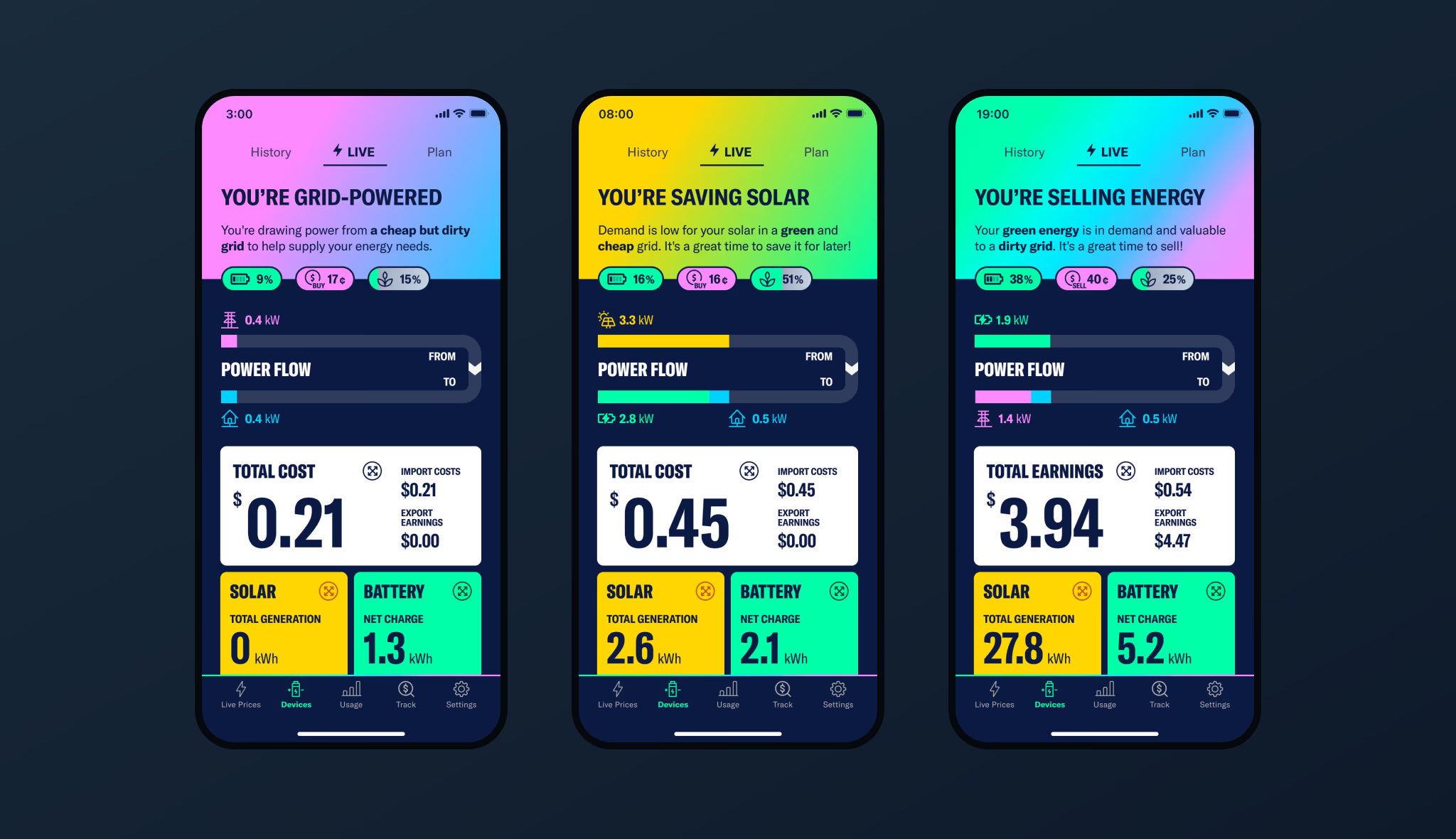
Amber is the leading Australian battery plan, built on a simple idea: give battery-powered homes the real-time wholesale price of power, with no markup, and let automation handle the best times to charge or export. Even as the category leader, the question was how to keep growing.
Why Amber tried Juno
So the team wanted to hear it straight from battery owners. Why they bought. How they live with the battery. What they make of Amber, and what they want from a retailer.
Mick gave two reasons for trying Juno. The first was speed. Research has traditionally been slow, and Amber wanted answers quickly, without losing quality. The second was the kind of answers it could get: “deeper answers to important business questions, at scale and with more depth and accuracy than we could get using other means.”
100 battery owners, all at once
“With the help of Hey Juno, we used AI to help us interview 100 battery homeowners,” Mick said. “At once.”
Some already had a battery on the wall. Some were about to. Each one had a real conversation with Juno, by text or voice, in their own browser. There's no script. Juno works from what Amber needed to learn and adapts the conversation to each person as they talk, choosing what to ask next based on what they've just said.
It started with the owners themselves: why they bought, how they use the battery day to day, what they already knew about Amber. Once Juno understood how each owner thought about their battery, it moved on to a few of Amber's positioning ideas and asked what they made of each one.
One message, two opposite reactions
One of the messages Amber was testing about itself divided the room. Owners who liked it chose it more often than any other option. Owners who didn't rejected it more often than any other.
In a survey, those two groups would have cancelled each other out. The message would have scored somewhere in the middle, and nobody would have known it was the most divisive option on the table.
Juno picked up the split. Owners explained in their own words what they liked or disliked about the message, and why. That gave Amber something a score can't: a clear sense of how to use the message, and who to use it with.
This is what Juno is built to do. It surfaces contradictions rather than averaging past them, and it keeps what the evidence shows separate from what it only suggests. The team can pull up the exact moments in the interviews behind any finding.
“It goes beyond what you'd expect by nudging participants and digging in with nuance,” Mick said. “We've already found it far more valuable than surveys: it can validate all answers in situ and add another layer of depth.”
What Amber took away
The interviews showed where the opportunity is: reaching more households, earning their trust, and making switching easy for someone who's already interested.
For Amber, Juno works like a researcher on the team. Any group with a big question can brief it, and it runs the study end to end.
Then other teams wanted in.
Read on

Finding barriers to conversion
How Juno helped StoryTribe uncover what stopped users upgrading, enabling targeted fixes that lifted conversion.

Accelerating digital adoption
How Chris Sinclair used Juno to map OFX customer journeys in five days, shaping their website architecture and content strategy.

Turning voices into policy
How The Arthritis Movement used Juno to surface what really matters to the people they represent, directly informing national policy.

What Australians really think about climate
How G+S Communications used Juno to run 200 qualitative interviews and create Climate Sentiment in Australia 2025, a national study that shows what Australians really think about climate action.
Understanding, automated.
Juno runs qualitative interviews with real people, unscripted, to find what you didn't know to ask.